Project Title: Technical Assistance, Training and Product Development
Client: Federal Emergency Management Agency
Purpose: To develop and maintain educational courses on earthquake mitigation and related training materials, to deliver training courses/webinars on behalf of FEMA, and to participate in national conferences to share information about FEMA reports. This project also supports the development and update of FEMA technical and non-technical guidance products and management of the National Earthquake Technical Assistance Program (NETAP).
This project has produced the following reports:
FEMA P-530, Earthquake Safety at Home
FEMA P-1024/RA2, South Napa Earthquake Recovery Advisory: Earthquake Strengthening of Cripple Walls in Wood-Frame Dwellings, Second Edition
FEMA P-1092, Guidelines for Performance-Based Seismic Design of Tall Buildings, Pacific Earthquake Engineering Center Tall Buildings Initiative, Version 2.01
FEMA P-2055, Post-disaster Building Safety Evaluation Guidance –Report on the Current State of Practice, including Recommendations Related to Structural and Nonstructural Safety and Habitability
FEMA P-2055-1, Guidance for Accelerated Building Reoccupancy Programs
FEMA P-2055-2, Recommendations for Cordoning Earthquake-Damaged Buildings
FEMA P-2090/ NIST SP-1254 Special Report, Recommended Options for Improving the Built Environment for Post-Earthquake Reoccupancy and Functional Recovery Time
ATC-137-2, Proceedings: FEMA-Sponsored Summit on Unreinforced Masonry Buildings in Utah
FEMA P-807-1, Guidance and Recommendations for the Seismic Evaluation and Retrofit of Multi-Unit Wood-Frame Buildings with Weak First Stories
FEMA P-232, Homebuilders’ Guide to Earthquake-Resistant Design and Construction
pdf FEMA P-2335(23.39 MB) , Guidelines for Post-Earthquake Repair and Retrofit of Buildings Based on Assessment of Performance-Critical Damage
Project Title: Technical Monitoring of New and Existing Seismic Building Codes and Related Training
Client: Federal Emergency Management Agency
Purpose: To continue FEMA’s support of the model codes and consensus standards development processes, submit proposed changes to the model codes based on the most recent edition of the NEHRP Recommended Seismic Provisions and other FEMA publications, assist state and local code adoption efforts upon request, and to support other code-related activities such as outreach and education to ensure that seismic risk is adequately addressed at the State and local levels.
This project has produced the following reports:
FEMA P-1091, Recommended Simplified Provisions for Seismic Design Category B Buildings
FEMA P-2078, Procedures for Developing Multi-Period Response Spectra at Non-Conterminous United States Sites
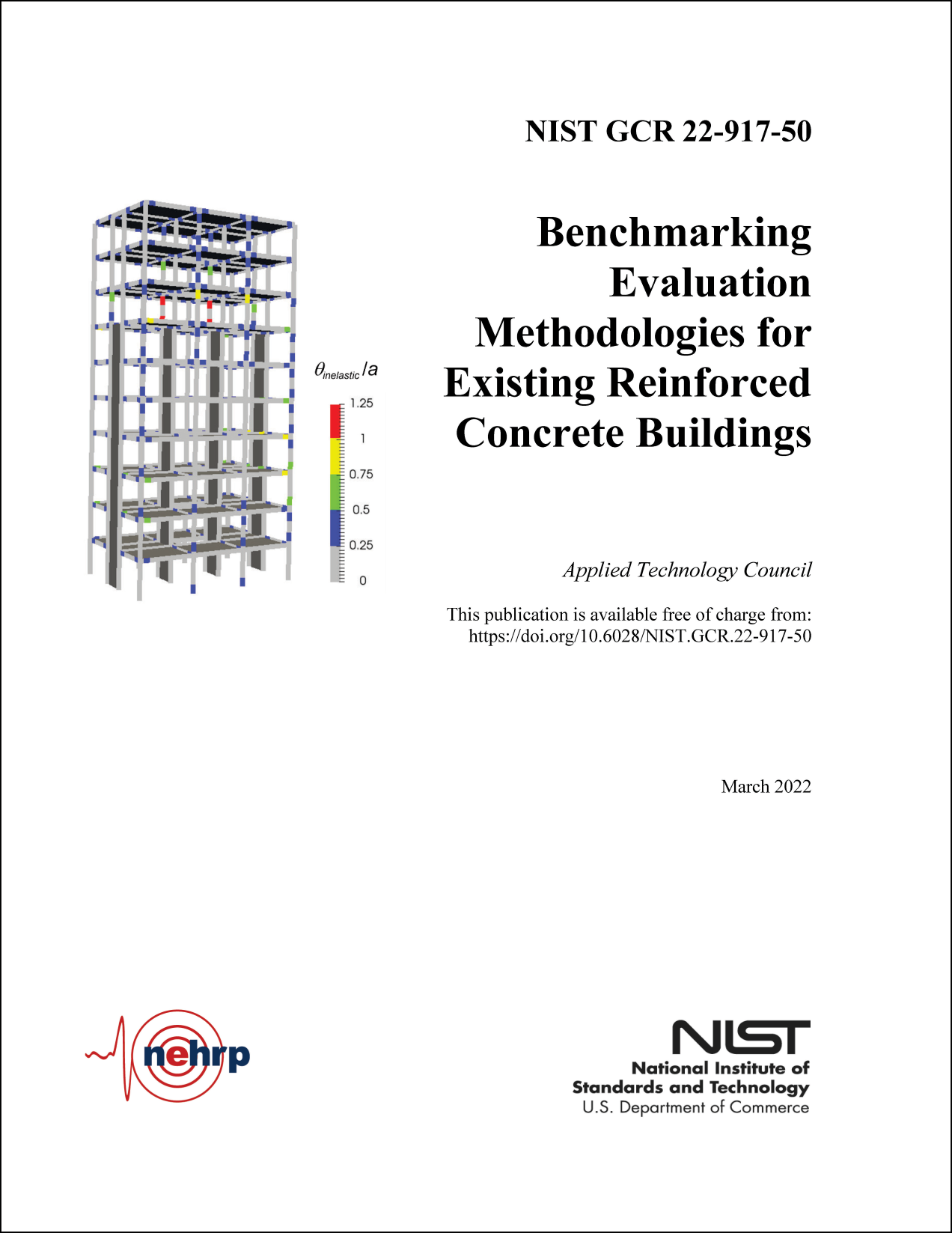
Project Title: Performance-Based Seismic Engineering: Benchmarking of Existing Building Evaluation Methodologies
Client: National Institute of Standards and Technology
Project Duration:
Purpose: The primary objective of this report is to benchmark evaluation methodologies for existing reinforced concrete buildings and present recommendations for improvement of the seismic evaluation procedures of ASCE/SEI 41-17, Seismic Evaluation and Retrofit of Existing Buildings. For this purpose, calculated results from implementing evaluation procedures described in applicable methodologies are compared to data available for eight reinforced concrete structures subjected to ground motion shaking.
This project produced the following report:
Project Team:
| Project Techncial Committee Russell Berkowitz (Project Director) Wassim Ghannoum Insung Kim Dawn Lehman Abbie Liel Laura Lowes Adolfo Matamoros Farzad Naeim Rob Smith John Wallace Project Review Panel Brian Kehoe Santiago Pujol Peter Somers Daniel Zepeda |
Working Group Members Saman A. Abdullah Tarbin Basnet Travis Chrupalo Alex Chu Dustin Cook Ariel Creagh John A. Egan Hamid Khodadadi Kristijan Kolozvari Ali Roufegarinejad Andrew Sen National Institute of Standards and Technology Siamak Sattar, Dustin Cook, Steven L. McCabe Applied Technology Council Jon A. Heintz Ayse Hortacsu |
Project Title: Improving Seismic Design of New Buildings
Client: Federal Emergency Management Agency
Purpose: To support two ongoing efforts under two Contract Line Items (CLINS), as follows: (1) CLIN 1, Improving Seismic Design of New Buildings with Configuration Irregularities; and (2) CLIN 2, Improving the Alternate Rigid-Wall Flexible-Diaphragm Building Design Procedure. The work under CLIN 1 is a continuation of ATC-123-2 and covers Phase 4 of the ATC-123 project series. The purpose of CLIN 1 is to help complete the problem-focused study for evaluation and improvement of code and standard requirements for seismic design of buildings with configuration irregularities. The work under CLIN 2 is a continuation of ATC-135 and covers Phase 2 of that work. The purpose of CLIN 2 is to improve and update the alternate design procedure for Rigid Wall and Flexible Diaphragm (RWFD) buildings.
Project Title: Seismic Safety and Engineering Consulting Services for the Earthquake Safety Implementation Program (ESIP), City and County of San Francisco
Client: City and County of San Francisco
Purpose: To provide technical expertise in completing selected tasks from the Earthquake Safety Implementation Program (ESIP) work plan that was developed under the CAPSS project (ATC- 119) and to conduct a study of tall buildings in San Francisco (ATC-119-1).
This project produced the following report: San Francisco Tall Buildings Study