Project Title: Guide for Repair of Earthquake Damaged Buildings to Achieve Future Resilience
Client: Federal Emergency Management Agency
Purpose: To review available information on repair of earthquake damage and develop and/or update repair design guidance.
default Resilient Repair Guide Source Report: Case Study Annex(108.19 MB)
FEMA P-2335, Guidelines for Post-Earthquake Repair and Retrofit of Buildings Based on Assessment of Performance-Critical Damage
 Project Title: Update of General Guidelines for the Assessment and Repair of Earthquake Damage in Residential Woodframe Buildings and Development of Additional Engineering Guidelines
Client: California Earthquake Authority
Purpose: To update the Consortium of Universities for Research in Earthquake Engineering (CUREE) Publication No. EDA-02, General Guidelines for the Assessment and Repair of Damage in Residential Woodframe Buildings, and to complete the initial draft of CUREE Publication No. EDA-06, Engineering Guidelines for the Assessment and Repair of Earthquake Damage in Residential Woodframe Buildings.
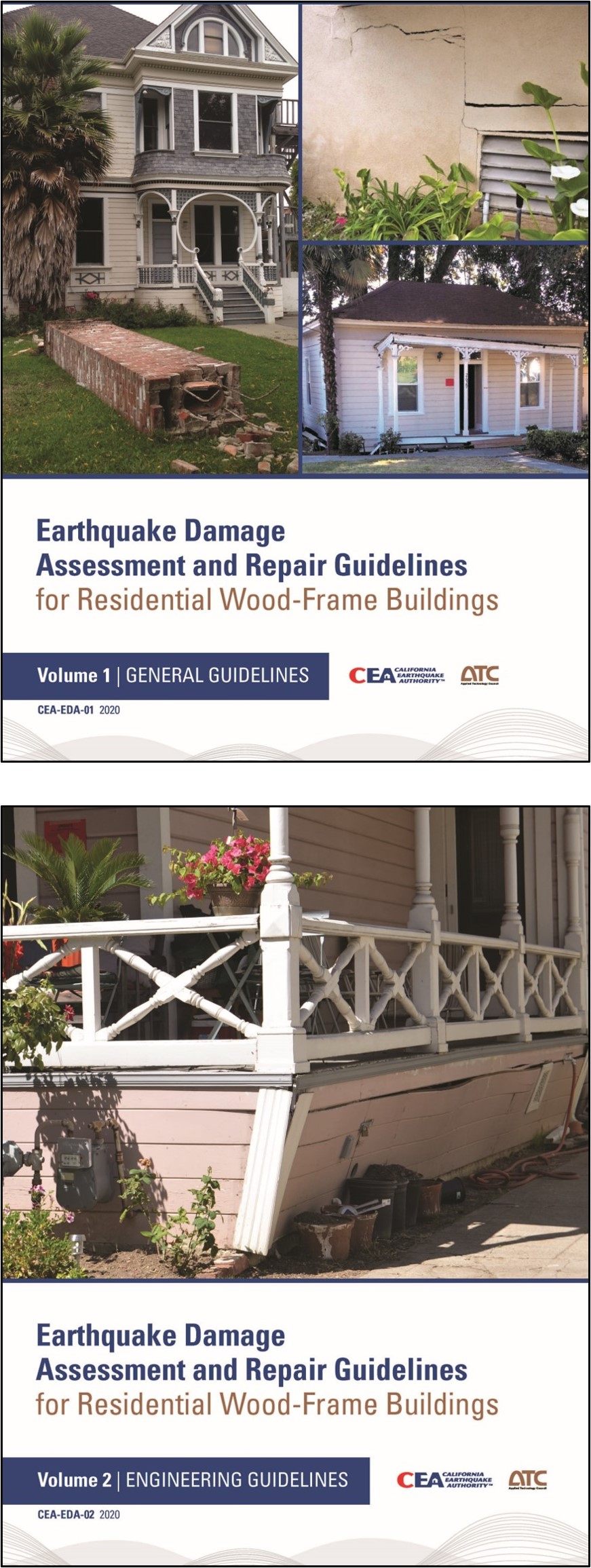
Overview: This project produced the CEA-EDA-01 report, Earthquake Damage Assessment and Repair Guidelines for Residential Wood-Frame Buildings, Volume 1 – General Guidelines, and the CEA-EDA-02 report, Earthquake Damage Assessment and Repair Guidelines for Residential Wood-Frame Buildings, Volume 2 – Engineering Guidelines.
The Earthquake Damage Assessment and Repair Guidelines for Residential Wood-Frame Buildings describe the process of identifying, evaluating, and repairing common earthquake damage in typical residential wood-frame houses and are intended to increase the efficiency, consistency, and reliability of the earthquake damage assessment and repair process. The documents are an integrated two-volume series that cover common earthquake damage, including cosmetic and structurally significant damage, as well as earthquake-induced permanent ground deformation.
Volume 1 (CEA-EDA-01) is intended to be used by insurance claim representatives, building contractors, homeowners, and others familiar with construction and repair. Volume 2 (CEA-EDA-02) is intended to be used by structural and geotechnical engineers, and others with relevant technical experience. The Guidelines help users create a conceptual scope of repair for a wood-frame house damaged by an earthquake.
The documents build and expand upon previous work conducted through the Consortium of Universities for Research in Earthquake Engineering (CUREE), which led to the publication of two documents for the assessment and repair of earthquake-damaged residential wood-frame buildings. These documents, commonly referred to as the CUREE Guidelines, have now been superseded by the two-volume series, Earthquake Damage Assessment and Repair Guidelines for Residential Wood-Frame Buildings.
 Project Title: Soil Structure Interaction Design Guide
Client: Federal Emergency Management Agency (FEMA)
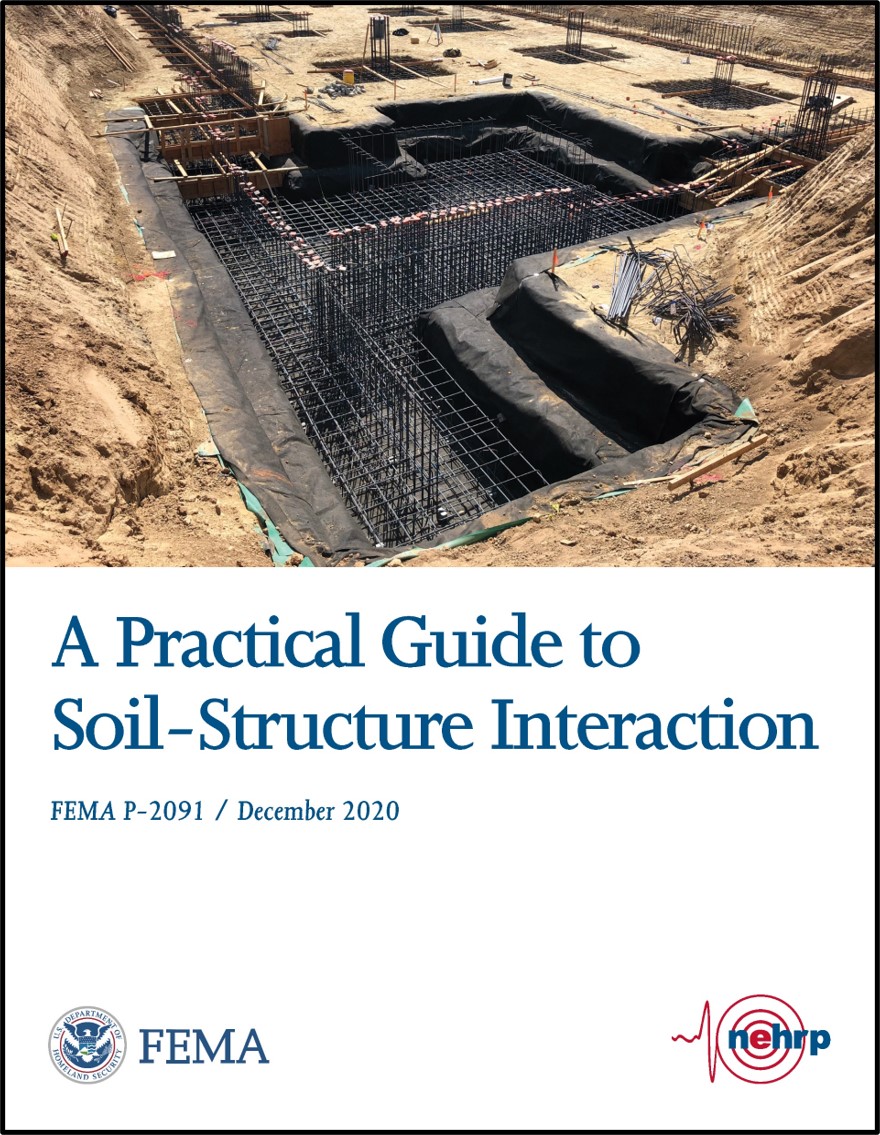
Purpose: Soil-structure interaction (SSI) can make a substantial difference in how buildings behave during earthquake shaking and how they should be designed, and ASCE/SEI 7-16 and in ASCE/SEI 41-17 include provisions that can be used to address SSI. This project developed FEMA P-2091, A Practical Guide to Soil-Structure Interaction, presenting information regarding SSI as implemented in code provisions but in an easy-to-understand, concise format targeted toward practicing engineers to help them determine when SSI effects are of importance and show them examples of how to implement them in design.
This project produced the following report:
FEMA P-2091, A Practical Guide to Soil-Structure Interaction
Project Title: Seismic Performance-Based Assessment of School Infrastructure in the Kyrgyz Republic
Client: World Bank
Purpose: To provide technical support in the prioritization process and definition of intervention strategy to reduce the seismic vulnerability of school infrastructure in the Kyrgyz Republic. The intervention strategy will be supported by results of targeted field inspections, and analytical work on seismic performance of school infrastructure in the Kyrgyz Republic. Specifically, this project will: (1) identify and characterize common structural typologies of school infrastructure in the country; (2) identify optimal strategies to improve the seismic performance of the common structural typologies; and (3) inform prioritization of schools to be intervened under the World Bank’s “Enhancing Resilience in Kyrgyzstan (ERIK)” project.
This project produced the ATC-142 report, Safety Prioritization of School Buildings for Seismic Retrofit using Performance-Based Risk Assessment in the Kyrgyz Republic
Project Title: Update of Seismic Evaluation and Retrofit of Existing Buildings Guidance
Client: Federal Emergency Management Agency
Purpose: To investigate and address technical issues regarding the evaluation and retrofit of existing buildings and develop material for the expanded FEMA design applications document that will replace the current FEMA 275 Design Examples document.